Lighting a bathroom in four scenes
Why one switch is never enough, how we separate the grooming layer from the atmosphere layer, and what the four presets on our keypads actually do.
December 9, 2025
The most common lighting mistake in a bathroom is a single bright downlight in the middle of the ceiling. It puts shadows under your eyes at the mirror, flattens every material in the room, and offers exactly one setting: on. A bathroom is used at six in the morning and at eleven at night, and those two uses need completely different light.
Separate the layers before you choose fixtures
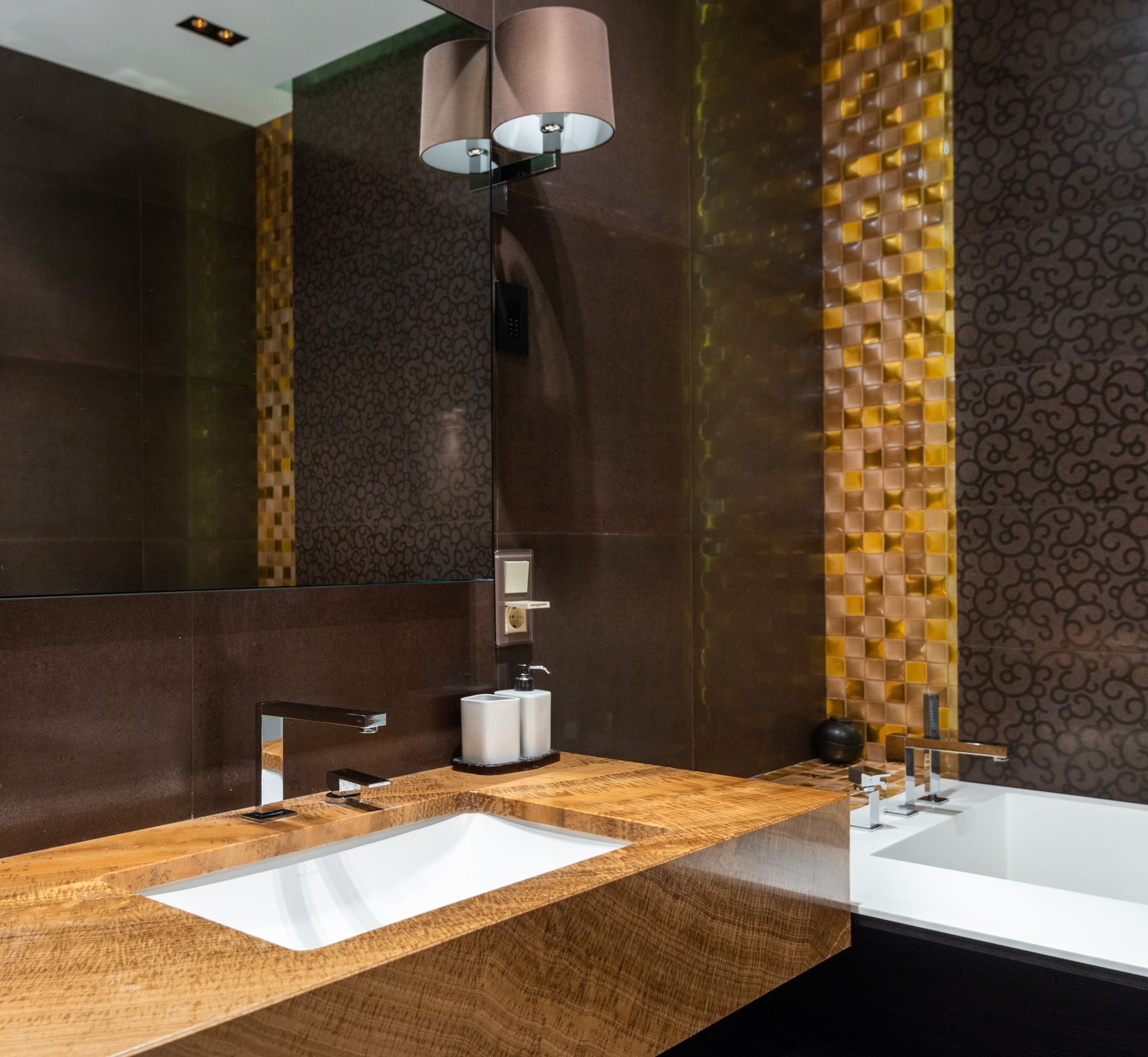
We plan four independent layers, then decide what hardware delivers each one. The task layer sits at the mirror and is the only layer that needs to be accurate. The ambient layer washes the ceiling or a wall and carries the room during ordinary use. The accent layer picks out a stone wall, a niche or a cove. The guide layer is a very low floor-level light for the middle of the night.
Each layer gets its own circuit and its own dimmer. That is the entire secret. Four circuits and a keypad produce a room that behaves completely differently at different hours, using the same fixtures.
The task layer is not negotiable
Grooming light has to come from beside your face, not above it. Two sconces flanking the mirror at roughly eye height, or a fully lit mirror panel, will out-perform any ceiling fixture. We specify around 3000K for this layer, high colour rendering, and enough output to shave or apply makeup accurately.
Everything else in the room can be warmer and dimmer. In fact everything else should be, because a uniformly bright bathroom at 3000K is a clinic.
What our four presets do
- Morning: task at full, ambient at about 60 percent, accent off, floor heat already up to temperature. Designed for accuracy, not atmosphere.
- Day: task dropped back, ambient carrying the room at around 65 percent and a slightly warmer temperature. This is how the stone looks in daylight.
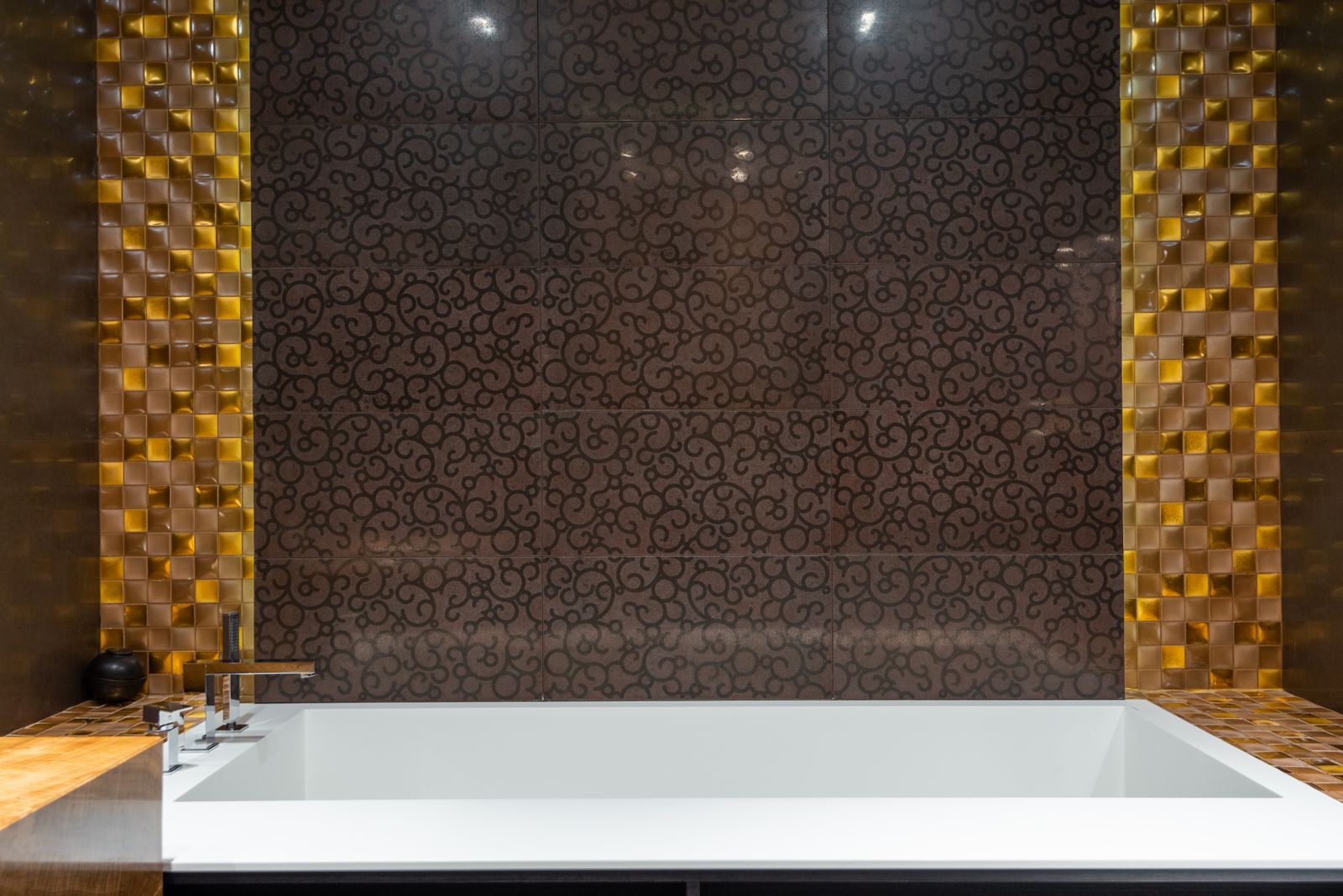
- Evening: task off, ambient very low, accent lighting on the feature wall and niches. The stone becomes the brightest surface in the room.
- Night: guide light at floor level plus a whisper of accent, around 2200K at under 10 percent. Enough to move safely without waking anyone.
Colour temperature over the course of a day
We shift temperature as well as brightness. Morning light sits around 3000K. By evening the room runs closer to 2400K, and the night scene drops to about 2200K, which is roughly candlelight. Warm-dim fixtures do this automatically as they dim, mimicking the way an incandescent lamp used to behave, and they are worth the premium in a room you use in the dark.
A bathroom needs one honest light for shaving and three flattering ones for everything else. Most bathrooms have the honest one and nothing else.
Mistakes we still see in new builds
Downlights placed directly over the mirror, which guarantees shadows on your face. Recessed fixtures in a wet ceiling that are not rated for the location. A single switch controlling every light in the room. Cove lighting with the LED tape visible as a row of dots because the cove was too shallow. And exhaust fans with an integrated light, which ties your ventilation to your lighting and means the fan runs whenever you want to see.
All of these are decided at rough-in, weeks before anyone picks a fixture. That is why lighting is on our agenda at the design stage, not at the shopping stage.